Group Texting Versus Mobile Apps: What Works?
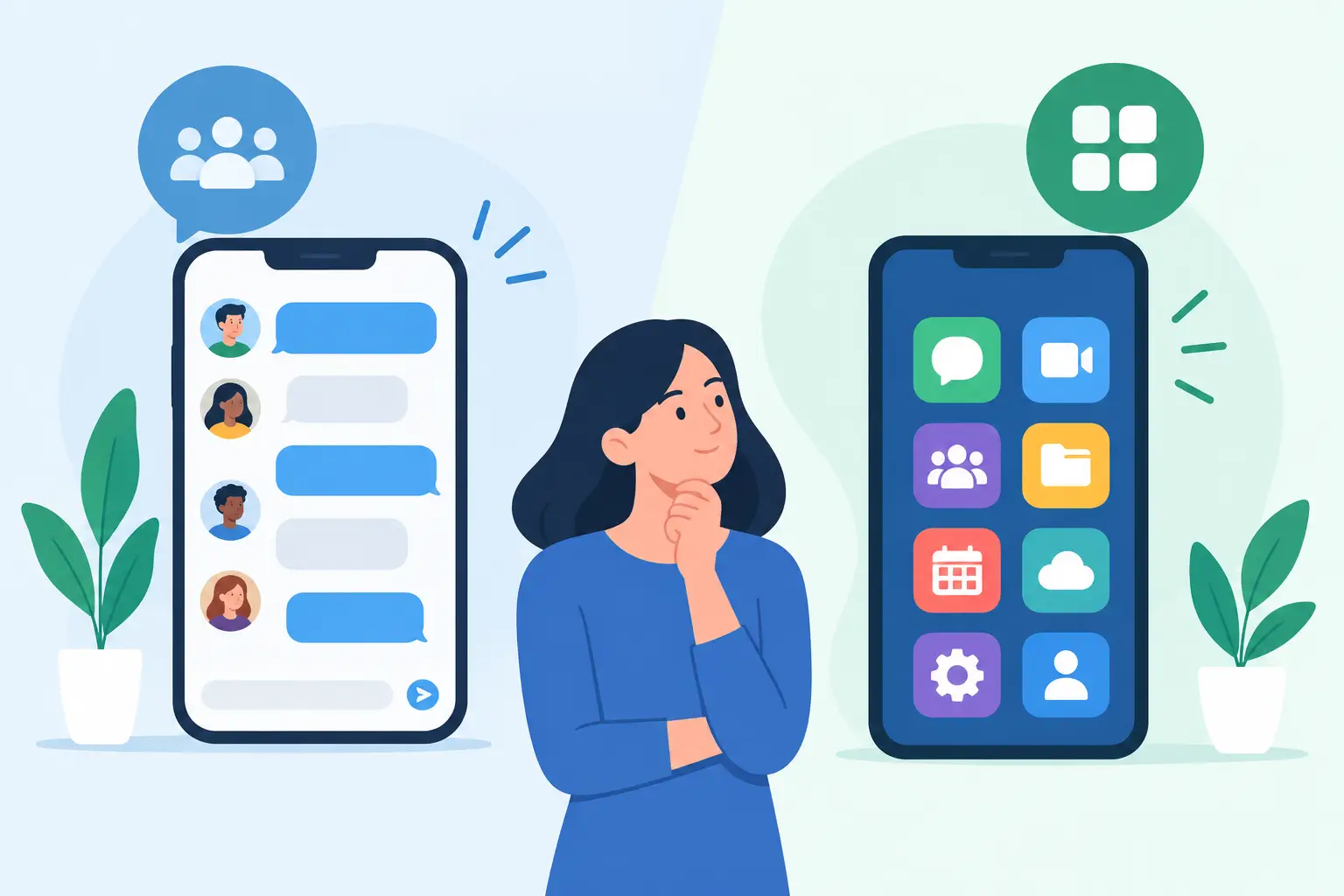
A school closes early because roads are icy. A practice moves fields an hour before kickoff. A volunteer shift opens up for tonight. In moments like these, the question is not whether your members will eventually see the update. It is whether they will see it in time. That is where group texting versus mobile apps becomes a practical decision, not a technology debate.
For community organizations, the right channel depends on the message, the audience, and how much friction people will tolerate before receiving information. Mobile apps can be useful places for ongoing activity and resources. Text messaging is often the more dependable option when an administrator needs to reach a defined group now.
Group Texting Versus Mobile Apps: The Core Difference
Group texting sends a message directly to a member's phone number, usually through SMS. Members do not need to download software, remember a password, or open a particular app to receive it. A properly managed group messaging platform lets an administrator send one message from a browser to an opted-in list, with records of consent and automatic handling of opt-outs.
A mobile app requires a different sequence. Members must find the app, install it, create or use an account, allow notifications, and keep notifications enabled. That can work well when people have a strong reason to return to the app regularly, such as checking schedules, viewing documents, or participating in discussions.
The difference matters because operational messages have a short shelf life. If a parent learns about a canceled rehearsal the next morning, the app technically delivered the message, but the communication did not do its job.
When Group Texting Is the Better Choice
Texting is built for immediate, concise communication. A member may not open a community app for days, but most people notice a text message quickly. That makes SMS a natural fit for schedule changes, closures, weather alerts, arrival instructions, payment reminders, volunteer requests, and last-minute location updates.
It is also easier to adopt across a mixed audience. A PTA may include parents who use different phone models and comfort levels with technology. A neighborhood association may include residents who do not want another account or another app taking up storage. Text reaches people through a tool they already use.
For administrators, group texting can reduce the work of chasing down who saw an announcement. The workflow should be straightforward: maintain one current member list, select the right audience, write the message, and send. No copying the same update into a group chat, a social platform, an email thread, and an app notification center.
That simplicity is especially valuable for organizations run by rotating volunteers. The next treasurer, coach, or committee chair should not need technical training to communicate responsibly with the group.
Texting still requires permission
Fast communication does not mean unrestricted communication. Organizations sending text messages should collect clear consent before adding a person to an SMS list, maintain a record of that consent, and honor STOP requests immediately. For minors, the appropriate guardian should provide permission.
These practices protect members' choices and protect the organization from preventable compliance problems. They also create a better member experience. People are more likely to stay subscribed when messages are expected, relevant, and easy to stop.
A dedicated group messaging tool such as Rally.msg is designed around this operational reality: self-service enrollment, timestamped consent records, guardian consent options, and opt-out suppression are part of the normal workflow rather than extra administrative work.
When a Mobile App Makes Sense
Mobile apps are not a poor choice. They are simply better suited to different jobs.
An app can be a useful home for information people need to revisit. Think team calendars, event registration, membership directories, documents, lesson materials, photo galleries, forms, and discussion spaces. Apps can also support richer experiences, including maps, checklists, video, and detailed event information that would be awkward in a text message.
An app works best when its value is obvious enough to earn a place on a member's phone. A youth sports league, for example, may use an app for the full season schedule, standings, roster information, and rainout policies. Members who check those details often may happily keep the app installed and notifications on.
The challenge is assuming that app installation equals app engagement. It does not. Some members will disable notifications. Others will change phones, forget passwords, or stop opening the app after the first few weeks. New members may not join promptly. If every person must receive a critical update, an app-only plan leaves room for missed messages.
Compare the Work Before You Choose
The best choice is less about features and more about the operational burden on your organization and your members.
Reach and urgency
For urgent announcements, group texting has the advantage because there is no required download or login. Email can be helpful for longer details, but it is not always read quickly. A text can point members to an email, document, or app when they need more context.
Mobile apps are stronger for information that benefits from a destination. If someone needs to review a complete tournament schedule or download a permission form, the app may be the right place to keep it. A text can still provide the immediate nudge: “Saturday’s tournament location changed. Check the app for the updated schedule.”
Setup and member adoption
An app creates an onboarding task for every member. That task may be reasonable for a highly engaged group, but it becomes a barrier when a community includes hundreds of people with varying levels of involvement.
Text enrollment should be equally intentional, but it can be much lighter. Let members enroll themselves through a clear process, confirm their permission, and keep their own contact information current. The organization gets a cleaner list, while members keep control over participation.
Message format and context
SMS is best for short, clear messages. “Band rehearsal is canceled tonight due to weather. Please do not come to the school.” That is exactly the kind of update that benefits from texting.
An app is better for content that needs more room and repeat access. It can hold the full rehearsal calendar, uniform requirements, parking instructions, and volunteer sign-up details. Trying to force all of that into a text thread creates confusion.
Cost and administration
An app may appear inexpensive at first, especially if it is bundled with another tool. But consider the hidden costs: setup, support questions, forgotten logins, duplicate data entry, and the time spent reminding members to turn notifications back on.
Group texting also has real costs, particularly because SMS is priced by message segments and requires responsible carrier-compliant sending. The right platform should make pricing understandable and help administrators avoid unnecessary messages. For many organizations, predictable subscription capacity and transparent overages are easier to manage than a complicated software rollout.
The Strongest Approach Is Often Both
For many groups, this is not an either-or choice. Use an app, website, or shared portal as the information home. Use text messaging as the alert channel that gets members' attention when something changes.
A faith community might keep recurring service information and volunteer resources in its app, then text members when severe weather changes the service plan. A school organization might use an online calendar for every event, then send a text when pickup procedures change unexpectedly. A neighborhood group might publish meeting materials online but text residents about a water shutoff or security concern.
The key is to establish a clear rule for members: texts are for timely, action-oriented updates; the app or portal holds the full details. That reduces message fatigue while making every channel easier to understand.
Choose the Channel Your Members Will Actually Use
Start with the message that causes the most disruption when it is missed. If it is a same-day closure, a schedule change, or a request that needs a quick response, texting deserves a central role. If it is a document library, a calendar, or a place for ongoing participation, a mobile app may earn its place.
Your members should not have to be tech-savvy to stay informed. Build around the habits they already have, collect consent clearly, keep messages relevant, and give people control over how they hear from you. The best communication system is the one that helps your community act at the moment action is needed.