Text Messages Versus Phone Trees for Groups
The gym loses power 45 minutes before practice. A storm moves a Saturday cleanup to Sunday. A school dismissal changes before the last bell. In moments like these, the difference between text messages versus phone trees is not just convenience. It is whether everyone receives the same instruction before they leave home.
Phone trees once gave community groups a workable way to spread urgent news without paying for a call center. But they rely on a chain of people who are available, have current numbers, understand the message, and remember whom to call next. For a small group with a stable roster, that may be enough. For a school, team, congregation, PTA, HOA, or volunteer program, it can quickly become a source of delay and confusion.
Text Messages Versus Phone Trees: The Core Difference
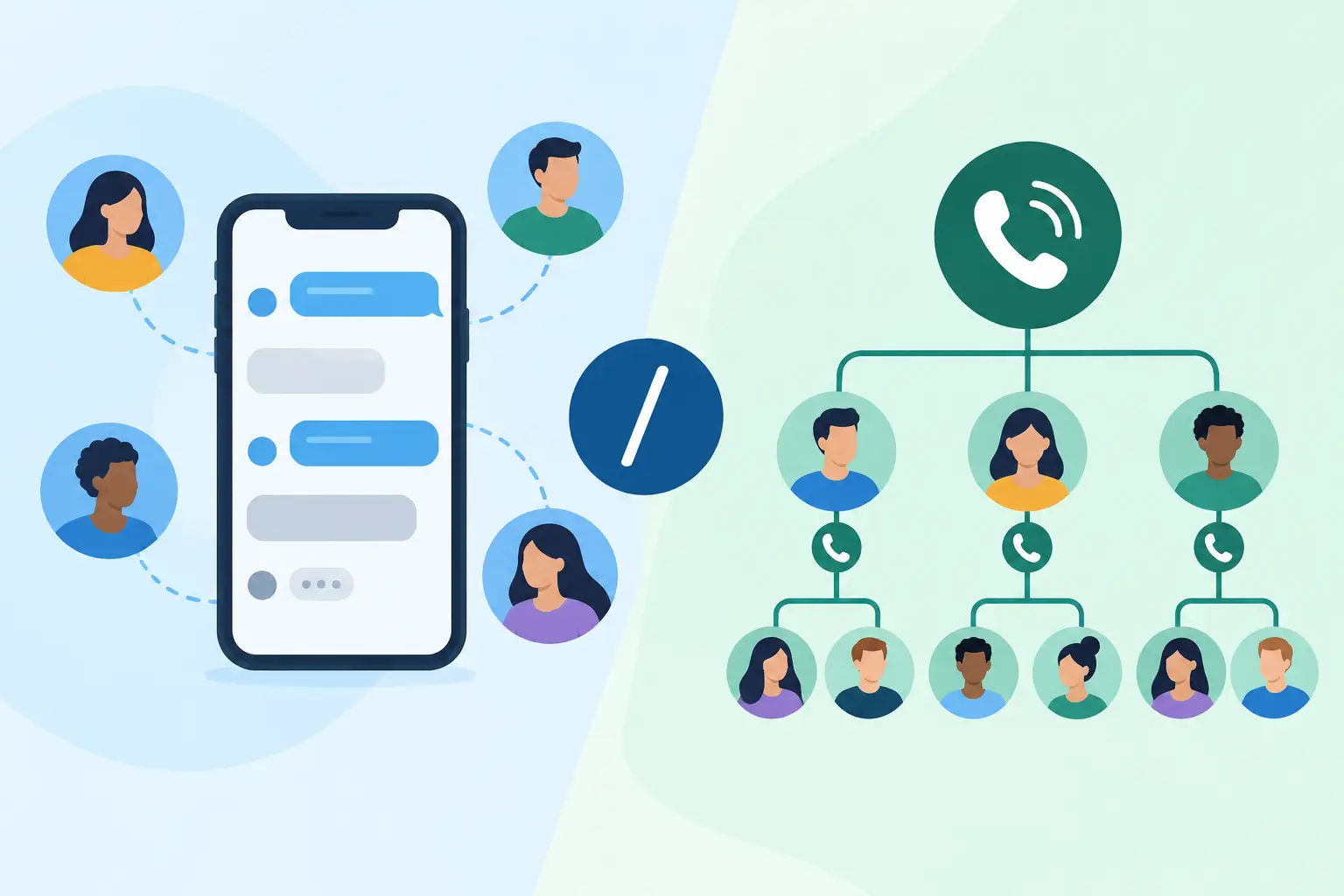
A phone tree distributes responsibility. One coordinator calls a few people, who call a few more, and so on. That approach can feel personal, but the message passes through many hands. Each handoff creates opportunities for missed calls, voicemail delays, outdated contact information, or a slightly changed version of the original instruction.
A group text messaging system sends one approved message directly to the people who opted in. The coordinator chooses the appropriate audience, sends from a browser, and each recipient receives the same wording at nearly the same time. There is one source of truth, not a series of retellings.
That distinction matters most when details are specific. “Practice is canceled” is simple. “Practice is canceled tonight because the gym is closed. Pickup remains at 6:00 p.m. at the west entrance” needs to arrive accurately. A centralized message keeps the details intact.
This does not mean every phone call is obsolete. A personal call still makes sense when a family needs individual support, when someone has not responded to a critical request, or when the matter is sensitive. The question is whether calls should be your primary broadcast system. For most groups, they should not.
Where Phone Trees Break Down
Phone trees have a hidden operating cost: someone must maintain them. New members join, families change numbers, leaders rotate, and participants move between activities. A printed list or informal spreadsheet can become inaccurate long before anyone notices.
The communication path is also difficult to verify. Did the first volunteer make their calls? Did a recipient answer? Did they call the next branch? When the message reaches only some people, the coordinator often has to start over with individual calls anyway. That is a lot to ask from volunteers who are already managing an event, responding to weather, or caring for their own families.
The model can also create uneven experiences. One person receives a detailed explanation. Another hears a shortened version from a rushed caller. Someone else gets a voicemail after the event is over. When the message involves a closure, safety concern, or schedule change, uneven information can create unnecessary frustration.
Privacy is another practical concern. Phone trees often require participants to share phone numbers with people they may not know. Some members are comfortable with that; others are not. A centralized system lets an organization communicate without turning its full contact list into a community directory.
Why Texting Fits Time-Sensitive Coordination
Text messaging works because it meets people where they already are. There is no app to install, no account to create, and no need for a volunteer to begin a calling shift. A parent can see a pickup change while standing in the grocery store. A coach can notify players of a field closure before they start driving. A volunteer coordinator can fill an open shift without sending several rounds of emails.
For broad operational updates, SMS is especially useful because it is immediate and brief. The best messages answer the recipient's immediate question: what changed, what should I do, and when does it take effect?
For example: “Tonight’s band rehearsal is canceled due to a building closure. Please do not come to campus. We will share the reschedule date by Friday.” That is clearer than asking callers to explain the situation repeatedly.
Email still has a valuable role. It is better for detailed schedules, forms, policy updates, meeting notes, and information members may need to reference later. Many organizations get better results by using both channels: text for the urgent headline and email for the complete details. The goal is not to replace every communication method. It is to match the channel to the job.
Consent Is Part of a Better System
Fast communication should not mean treating every phone number as permission to text. Community groups need a clear way for members to opt in, understand what messages they will receive, and stop messages when they choose.
A responsible group messaging process records consent at enrollment, retains a timestamped record, and respects STOP requests immediately. This protects recipients from unwanted messages and gives administrators a cleaner, more reliable list. If a number has opted out, it should not quietly return to the next broadcast because an old spreadsheet was uploaded again.
Groups that work with minors need an added layer of care. A student may participate in a band, team, or youth program, but the appropriate contact may be a parent or guardian. Your enrollment process should make that relationship clear and keep guardian consent attached to the right communication record.
These practices are not administrative clutter. They reduce awkward conversations, limit avoidable mistakes, and show members that their contact information is being handled responsibly. They also align the organization with the consent and opt-out expectations that apply to business and organizational texting in the United States.
What a Practical Broadcast Workflow Looks Like
The strongest replacement for a phone tree is not a complicated communications platform with settings no volunteer wants to touch. It is a simple process that leaders can repeat when the pressure is on.
First, create an organization-managed contact list rather than relying on one person's phone. Let members enroll through a self-service process, and collect the fields that actually help you communicate, such as grade, team, neighborhood, role, or guardian relationship. Keep the list current as people join or leave.
Next, decide who can send messages and who can update contacts. A PTA president may need to send a meeting reminder, while a school activity director may need to reach every family during a closure. Giving the right people access prevents a single volunteer from becoming the communication bottleneck.
Then, write messages for action. Lead with the change, include the time or location if relevant, and state the next step. Avoid long explanations during urgent updates. If more context is needed, follow with an email or a second message after the immediate decision is clear.
Finally, use saved groups thoughtfully. A message about a varsity game delay should go to the affected athletes and families, not every contact in the organization. Segmentation keeps alerts relevant and helps preserve trust in your messages.
Rally.msg is built around this kind of workflow: enroll members with consent, organize the contacts you need, and send one message to the right group without asking an IT department to run the system.
Choose Based on the Stakes, Not Habit
A phone tree may still work for a close-knit group of 10 people, especially if the update is not urgent and every participant expects personal calls. It can also complement a broader alert when leaders need to check on a specific member.
But once your group has hundreds of contacts, multiple programs, changing rosters, or frequent schedule changes, the trade-off shifts. A phone tree offers familiarity, but it asks people to carry too much of the operational load. Group texting offers speed and consistency, but it requires disciplined contact management and clear consent.
For most community organizations, that is the better trade. Set up the list carefully once, give members control over enrollment and opt-out, and save your volunteers from spending a weather cancellation making 60 calls. When the next change arrives, your message can be short, accurate, and already on its way.